


















owner three

As Compliance Manager at Priority Recruitment, I see every day how vital strong compliance is within complex care staffing. When you are recruiting and placing support workers into complex care environments, compliance is not an admin task, it is a responsibility that directly impacts safety, quality of care, and trust.
Complex care support work involves supporting individuals with highly specific and often sensitive needs. That level of responsibility demands robust, consistent, and well managed compliance processes at every stage of recruitment.
Protecting people with complex and vulnerable needs
Individuals supported through complex care services often live with long term conditions, physical disabilities, learning disabilities, neurological conditions, or multiple health needs.
Compliance processes in complex care staffing help ensure:
-
Enhanced DBS checks are completed
-
Right to work and identity checks are verified
-
Thorough employment referencing is carried out
-
Mandatory training is completed prior to placement
These checks help safeguard vulnerable individuals and support safe, person centred care delivery.
Supporting safe and confident complex care support workers
Compliance does not only protect the people receiving care. It also plays a crucial role in supporting the support workers themselves.
Complex care support workers are often delivering one to one care in challenging and emotionally demanding settings. When compliance is done properly, staff are equipped with the training, knowledge, and understanding they need to do their job safely and confidently.
This includes ensuring mandatory training is completed and refreshed, specialist training is aligned with the role, and placements are appropriate to each individual’s experience and competence.
Well supported, well trained support workers deliver safer, more consistent care.
Maintaining high standards across complex care staffing
In complex care recruitment, maintaining high standards is non negotiable. Compliance helps ensure that care is delivered consistently, responsibly, and in line with regulatory expectations.
By keeping compliance records accurate and up to date, recruitment partners play a key role in supporting providers to meet their own governance and inspection requirements.
Strong compliance frameworks also help reduce variation in care quality by ensuring all support workers meet the same baseline standards before being placed into complex care services.
How compliance reduces risk in complex care enviornments
Risk management is a core function of compliance in complex care staffing. Proactive compliance helps identify and manage potential risks early.
This includes:
-
Identifying gaps in training before placement
-
Ensuring documentation remains current and accurate
-
Reviewing suitability for complex or high risk placements
-
Preventing inappropriate or unsafe staffing decisions
Proactive compliance reduces incidents and supports safer outcomes for everyone involved.
Building trust with providers, families, and commissioners
Trust is central to complex care. Providers rely on recruitment partners to supply staff who are safe, competent, and fully compliant. Families trust that the people supporting their loved ones are appropriately trained and vetted.
Clear, transparent compliance processes provide reassurance to everyone involved. They demonstrate professionalism, accountability, and a genuine commitment to safeguarding and quality.
For commissioners and healthcare professionals, strong compliance also provides confidence that staffing arrangements are robust and well governed.
Accountability and professionalism in complex care recruitment
Effective compliance creates clear processes, auditable records, and accountability at every stage of recruitment. This is essential in complex care staffing, where scrutiny is rightly high.
At Priority Recruitment, compliance is embedded into how we operate. It ensures we take responsibility for the people we place and the environments we place them into.
Professional compliance processes help build long term partnerships with providers and support consistent, safe staffing solutions.
A commitment to continuous improvement
Compliance in complex care staffing is not static. It must evolve alongside regulations, best practice, and changing care needs.
At Priority Recruitment, our compliance processes are continually reviewed to:
-
Strengthen safeguarding measures
-
Update training requirements
-
Improve placement suitability
-
Raise standards across complex care staffing
Strong compliance underpins everything we do, because safe, reliable complex care staffing starts with getting the foundations right.
Kate Hopkinson

Kate is the Head of Healthcare at Priority Recruitment, bringing over 20 years of experience in healthcare recruitment and nursing workforce solutions.
She has spent her career supporting NHS and private healthcare providers with high quality temporary staffing across a wide range of care settings.
Having worked with leading recruitment firms, Kate has built a strong reputation as a high performing recruitment leader. She has received numerous high flyer and top billing manager and consultant awards, recognising her ability to deliver outstanding results while maintaining exceptional service standards within healthcare staffing.
Kate specialises in complex care and supported living recruitment for both adults and children, with a strong regional focus across the North West. Her expertise spans sourcing, placing, and supporting skilled healthcare professionals who deliver continuity of care to vulnerable individuals.
The most rewarding part of Kate’s role is mentoring and developing healthcare recruitment consultants, helping them exceed expectations and perform at their best. She is deeply motivated by knowing that the right healthcare placement can improve quality of life, provide stability, and support families within the community.
Looking Back on 2025: A Year of Growth, Impact and New Beginnings at Priority Recruitment

As 2025 comes to a close, it’s the perfect moment to reflect on an incredible year for Priority Recruitment. From launching new initiatives to welcoming fresh faces to our team, this year has been all about growth, impact, and laying the foundations for an exciting future.
Launching Thriving: A New Chapter in Care
One of the standout highlights of 2025 was the launch of our new brand, Thriving by Priority Recruitment. Thriving is a CQC-registered domiciliary care company based in Manchester, delivering specialist complex care across the UK.
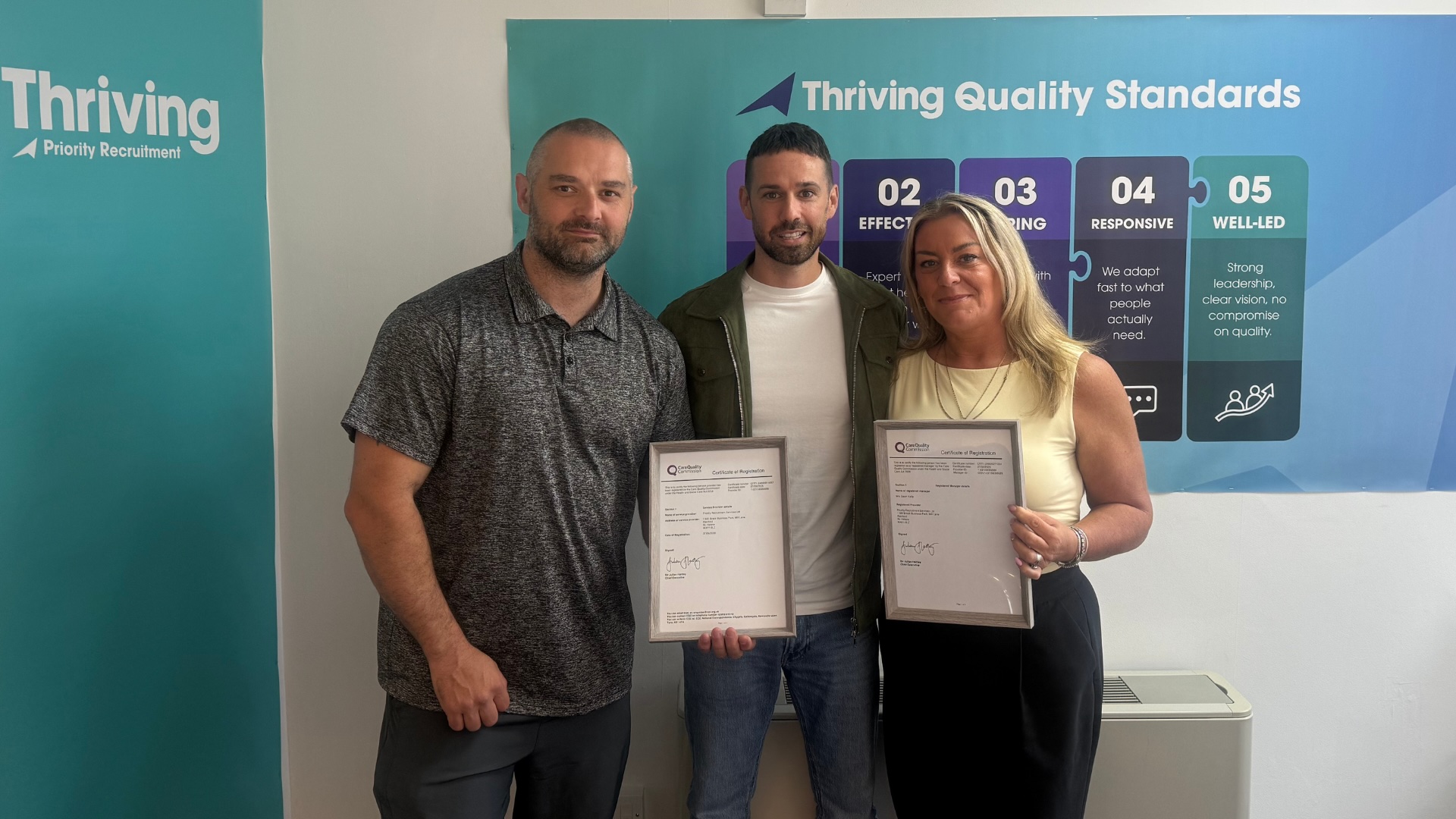
What makes Thriving truly unique is our commitment to outstanding, personalised care that helps individuals live independently. We focus on building trusted relationships that empower each person to truly thrive, connecting them with compassionate professionals dedicated to making a difference.
This launch marks a proud milestone for the entire Priority team and reflects our ongoing mission to provide exceptional care and support.
Welcoming New Team Members

Our team grew this year with four fantastic new starters:
Dawn Kelly – Registered Manager
Dawn leads our registered care service specialising in complex care, bringing a genuine passion for people and their wellbeing. She’s known for building strong, supportive teams and championing person-centred care so every client feels valued and empowered. Her hard work and dedication were celebrated when she won Grafter of the Year at our Annual Awards Ceremony.
Angel Goodman – Recruitment Resourcer
Angel has quickly become an essential part of our recruitment team. Winning New Starter of the Year at our Annual Awards Ceremony, she is focused on finding the right talent for every role. Angel combines precision with a personal touch, ensuring every candidate feels valued and every client receives the perfect fit. Her commitment to building relationships and understanding people makes her a natural at connecting the right candidates with the right opportunities.
Levi Hunt – Recruitment Consultant
Levi brings experience and insight to the recruitment process, helping to match skilled candidates with life-changing roles. With a friendly, approachable manner and an eye for potential, Levi ensures every interaction is professional, supportive, and results-driven. He’s already making a real difference in helping our clients and candidates thrive together.
Jamie Reid – Social Media and Marketing Executive
Jamie joined us to support our social media and marketing efforts, bringing creativity, flair, and a keen eye for engaging content. He has been instrumental in telling our story online, showcasing both our recruitment successes and the incredible work happening every day.
Each new team member has already made a positive impact, and we’re thrilled to have them with us as we continue to grow.
First-Time Work Experience Placements
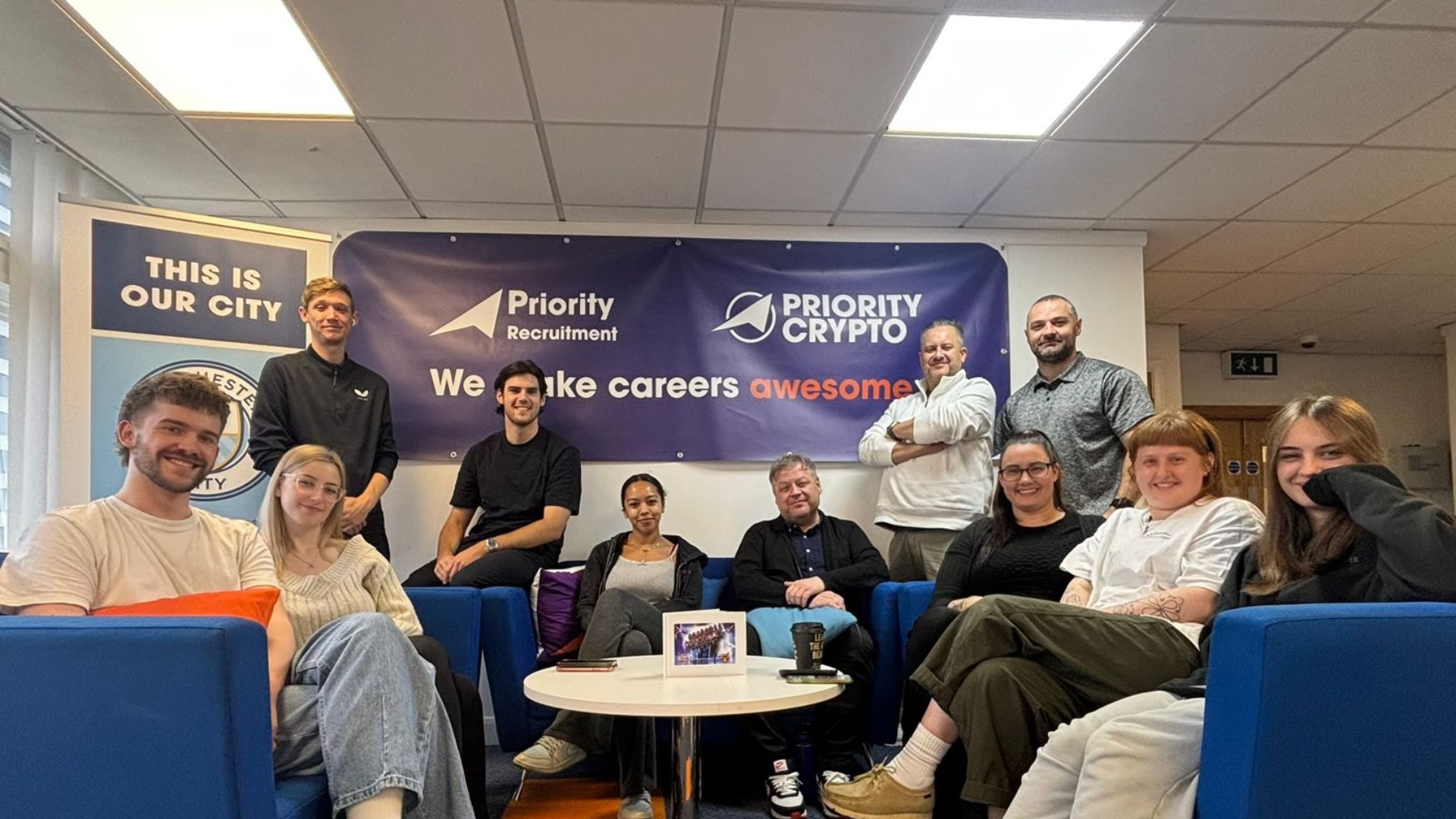
In an exciting first for the company, we welcomed two work experience students for a two-week placement. Focused mainly on recruitment marketing, they gained insight into the day-to-day workings of Priority Recruitment, seeing how our team operates and supports both clients and candidates.
We’re proud to have provided this opportunity and look forward to offering more placements in the future.
Giving Back: Supporting Manchester Mind

Community involvement has remained a key focus in 2025. We held 12 fundraisers for Manchester Mind, supporting vital mental health initiatives across the city.
Our events included the Burrs Colour Dash, an Auction of Promises, a pool tournament, drawing contests, and even a “What’s in the Box?” challenge (which has ruined jam for everyone in the office). Not only did these fundraisers raise money for essential mental health services across Manchester, but they also brought us together as a team and provided us with some incredible memories.
Looking Ahead to 2026
As we reflect on 2025, it’s clear that this has been a year of exciting change, new beginnings, and meaningful impact. Every milestone has reinforced what makes Priority Recruitment special: our commitment to people, care, and genuine connections.
Looking ahead, we can’t wait to continue building on the successes of this year, expanding our services, welcoming more incredible talent to our team, and making an even bigger impact in the communities we serve. Here’s to a year ahead filled with growth, opportunity, and thriving together.

The festive season brings joy, family time, and celebrations, but for support work teams, it also comes with unique challenges. Staff taking well-earned holidays, increased demand for care, and the risk of burnout all combine to create a seasonal staffing crunch. For agencies and care providers, planning ahead is essential to ensure clients continue to receive the high-quality support they rely on.
Understanding the Seasonal Staffing Crunch
During December, it is common to see a significant reduction in available staff. Many support workers take time off to be with family, while others may be affected by winter illnesses. At the same time, demand for care often rises, particularly in healthcare settings, assisted living, and services for vulnerable adults. This combination can create coverage gaps that impact clients’ routines, wellbeing, and safety.
Even small gaps can create pressure for remaining staff, who may need to cover additional shifts at short notice. This can increase stress levels and risk of burnout, which, if not managed carefully, can affect the quality of care provided.
Planning Ahead for Continuity of Care
Proactive planning is key to navigating the festive staffing crunch. Agencies and providers can take practical steps to ensure smooth operations:
-
Forecast staffing needs early: Identify potential gaps by reviewing leave requests and seasonal trends.
-
Offer flexible shifts and incentives: Encourage staff to cover key periods by providing benefits such as holiday pay bonuses or extra leave later.
-
Maintain a pool of temporary staff: Keep relief staff on standby who can step in to cover absences.
-
Communicate schedules in advance: Share holiday rotas early so staff and clients can plan accordingly.
-
Rotate shifts fairly: Ensure no single worker bears the brunt of covering holiday periods.
The Impact on Clients
Continuity of care is more than filling shifts. For clients, having familiar support workers during the festive season helps maintain routines, reduces anxiety, and supports overall wellbeing. Gaps in staffing can lead to disruptions in care, which can be particularly challenging for those who rely on daily support. Agencies that plan effectively not only protect their clients but also uphold trust in their services.
Supporting Staff Wellbeing
A motivated and appreciated team is essential during busy periods. Care providers can support staff by:
-
Recognising extra effort with thank-yous or small festive perks.
-
Offering flexible leave swaps so staff can still enjoy some holiday time.
-
Creating a supportive team culture where staff feel valued and heard.
Conclusion
The festive season may present extra challenges for support work staffing, but careful planning and a proactive approach can ensure clients receive uninterrupted care. By forecasting needs, communicating early, and valuing staff contributions, agencies can navigate the seasonal crunch successfully. For care providers looking for reliable temporary or relief staff during busy periods, partnering with agencies like Priority Recruitment can make all the difference, keeping both staff and clients supported throughout the holidays.

Black Friday has become the clearest snapshot of how ready UK retailers really are for peak season. It is no longer just a promotional event, it is a practical test of team structure, customer experience, operational resilience and the quality of seasonal hiring. This year showed some strong patterns that every retailer should take seriously as they head into December.
Customers are shopping with intention, not impulse
Footfall may be up, but customer behaviour shifted. People arrive prepared, more price aware and more purposeful. They knew exactly what they wanted and expected fast confirmation from staff. That demanded confident communicators on the shop floor. Teams that were under trained or stretched too thin struggled to keep up, which directly impacted conversion. Stores with better prepared staff navigated peak hours with pace, accuracy and less friction for customers.
Click and collect continues to reshape in store teams
The blend between online and in store retail is now fully merged. Click and collect volumes surged again, and in many stores those queues grew faster than till lines. This created real pressure on stock rooms, customer service desks and front of house teams. The retailers who managed it well had multi skilled staff who could move between tasks without slowing the operation. The ones who stuck to rigid roles found bottlenecks forming fast. Black Friday made it clear that flexibility in staffing is no longer a nice to have, it is essential.
The bar for seasonal staff has risen sharply
Seasonal hires are now stepping into roles that involve far more than basic customer interactions. They have to handle pressure, understand promotions, support stock turnover and maintain service quality when queues are building. The skill gap between a solid seasonal worker and an unprepared one was more obvious than ever. Stores that invested early in high quality temporary staff saw smoother operations, fewer customer issues, and better energy on the shop floor. Those who hired late had less time for onboarding and paid for it in slower service.
Understaffing costs retailers more than they think
Being short on staff used to be seen as a rota problem. Black Friday proved that it is actually a revenue risk. Missed sales, abandoned baskets, slower replenishment, increased returns, and customer frustration all hit margins. On top of that, permanent teams burn out when they are forced to pick up the slack. Retailers who staffed generously protected their revenue and protected their people. The cost of extra support was far lower than the cost of losing sales during the busiest trading weekend of the year.
Operational discipline mattered just as much as staffing levels
Black Friday also highlighted that hiring the right number of people is only half the battle. The other half is structure. Clear briefing, good zone management, defined priorities, and steady communication helped teams stay calm even when traffic spiked. Where planning was weak, even strong teams became reactive instead of intentional. Retailers who combined good staffing with good leadership delivered consistently better customer experiences.
December pressures will stretch teams further
Black Friday is no longer the start of peak season, it is the midpoint. From now until Christmas, customer volumes increase, delivery cut offs create urgency, returns begin to rise and stock turnover accelerates. If teams felt any strain during Black Friday, it will intensify in December. This is the moment to reinforce teams, not wait for the next crisis point.
The takeaway for retailers
Black Friday revealed more than buying patterns. It revealed the health of retail teams, the gaps in preparation, the strengths of multi skilled staff, and the direct link between good hiring and strong performance.
Priority Recruitment supports retailers with people who can handle the real pressure of peak trading. If Black Friday exposed any cracks in your staffing or operations, we can help you fix them fast. Our candidates are reliable, ready to work and trained to thrive in busy environments.
If you want December to run smoother than Black Friday, reach out today. With the right people in the right places, you can turn peak season into your best trading period, not your most stressful one.

Hiring top talent is challenging. Even highly qualified candidates can drop out if your interview process lacks focus. Small mistakes can turn promising applicants into lost opportunities. These seven mistakes are common in recruitment, with steps to avoid them.
1) Unstructured Interviews
-
Interviews without a plan lead to inconsistent questioning. Candidates may be asked different questions depending on who meets them first.
-
This makes comparing applicants difficult. Decisions rely on first impressions rather than skills or potential.
-
Create a structured interview framework. Include technical, behavioural, and situational questions. Use a scoring sheet for each competency. Ensure all interviewers understand the criteria and record notes objectively. This makes post-interview discussions more precise and reduces bias.
2) Focusing Only on Skills, Not Culture Fit
-
Candidates may have the right technical skills but struggle to integrate with the team or company culture.
-
Misalignment increases turnover and lowers engagement. Early departures disrupt projects and cost time and money.
-
Ask questions that reveal collaboration, problem-solving, and adaptability. Include team exercises or group discussions to see how candidates interact with colleagues. Highlight cultural expectations and values during interviews. Assess whether the candidate’s working style matches the team environment.
3) Taking Too Long to Respond
-
Slow follow-ups or delayed decisions frustrate candidates. Top applicants often have multiple offers and will accept another role if you take too long.
-
Delays create negative perceptions and reduce your chances of hiring the best talent.
-
Set clear timelines at the start. Communicate updates regularly, even if no decision has been made. Simple messages such as, “The team is reviewing applications and we will respond in three days” keep candidates engaged. Use recruitment tools to track progress and send reminders automatically.
4) Overloading Candidates With Multiple Rounds
-
Excessive interviews or assessments can tire candidates and create a poor experience.
-
Long, drawn-out processes increase drop-off rates and discourage high-quality applicants.
-
Streamline your process. Combine rounds where possible and explain what each step involves. A two-step process with a skills assessment followed by a team interview often provides enough insight. Keep the process efficient and transparent to retain top candidates.
5) Failing to Sell the Role or Company
-
Companies often forget that interviews are a two-way evaluation. Candidates assess the organisation as much as the employer assesses them.
-
Applicants want to understand growth opportunities, team culture, and career progression. Without clear communication, candidates may accept offers elsewhere.
-
Use interviews to highlight what makes the company unique. Explain career paths, team achievements, and projects that matter. Share examples of how employees develop skills and grow within the company. Candidates who understand the role and value your company are more likely to accept offers and stay engaged.
6) Ignoring Candidate Feedback
-
Candidates provide insights about your recruitment process that many companies ignore.
-
Overlooking feedback reduces chances to improve and can harm your reputation. Candidates who have poor experiences may discourage others from applying.
-
Collect feedback after interviews through surveys or follow-up calls. Look for trends in responses and adjust your process accordingly. Acting on feedback improves engagement and strengthens your employer brand. Candidates notice when companies respond to input, which can influence their decision to accept a role.
7) Relying Too Heavily on Gut Feeling
-
Decisions based on instinct often reflect unconscious bias and inconsistency.
-
Gut-driven hiring increases the risk of poor team fit, early turnover, and reduced performance.
-
Use structured evaluation tools. Include multiple interviewers to provide varied perspectives. Compare candidate performance against defined criteria rather than impressions. Objective assessments ensure you hire people who meet the needs of the role and the team.
Avoiding these mistakes improves hiring outcomes, reduces turnover, and creates a smoother recruitment process. Priority Recruitment helps companies attract and secure top talent efficiently. Structured interviews, clear communication, and objective evaluation make hiring faster and more effective while keeping candidates engaged throughout the process.

Group interviews are becoming a key tool in retail recruitment. They allow hiring managers to see how candidates behave in real situations, compare skills in real time, and speed up the hiring process.
Understanding how group interviews work can give you the edge when applying for retail jobs in the UK.
What is a retail group interview?
A group interview gathers several candidates together in one session. You might take part in discussions, problem-solving exercises, or role-playing customer scenarios.
Managers observe how you communicate, work with others, and react under pressure. Group interviews are practical, fast, and reflect real store life.
Why retailers use group interviews
Retail roles rely heavily on teamwork, communication, and customer service. Group interviews show these skills in action. They are especially useful for roles and situations such as:
- Sales assistant or shop floor teams where working together keeps queues moving smoothly
- Customer service and till roles where clear communication prevents delays or confusion
- Busy seasonal periods like Christmas shopping where the ability to support each other is essential
- Fast paced product launches or promotional events where staying organised and calm matters
- Stock and replenishment teams who need to coordinate during deliveries to keep shelves full
These sessions help reveal who can step up, who can collaborate without taking over, and who brings great energy to the team.
Benefits for employers include:
-
Spotting candidates who work well with colleagues and customers.
-
Comparing candidates side by side, beyond the CV.
-
Identifying natural leaders and effective communicators.
-
Reducing time to hire by assessing multiple candidates in one session.
Research from Retail Week shows that 40 percent of major UK retailers now use group assessments for entry-level roles. They help find candidates who fit store culture quickly and efficiently.
How to prepare for a retail group interview
You do not need to dominate the room. Employers look for candidates who are engaged, professional, and collaborative.
Before the interview:
-
Research the store, brand, and typical customer experience.
-
Prepare short examples of teamwork or customer service from past roles.
-
Dress appropriately for the retail environment.
-
Arrive early and greet staff and other candidates politely.
During the interview:
-
Speak clearly, listen to others, and respond thoughtfully.
-
Participate in all tasks, even small ones.
-
Stay calm, professional, and cooperative under pressure.
-
Show energy and focus until the session ends.
Think of every task as a reflection of what your day-to-day role would look like.
What hiring managers look for
Group interviews reveal more than a CV can. Employers watch for candidates who:
-
Work well with others.
-
Stay calm and positive under pressure.
-
Solve problems quickly.
-
Communicate clearly with staff and customers.
Engage actively and respectfully, and you will stand out for the right reasons.
How Priority Recruitment supports retail candidates
At Priority Recruitment, we help candidates prepare for group interviews and secure roles in retail across the UK. Our team shares advice, runs prep sessions, and connects candidates with leading retailers.
If you are looking to break into retail, speak to our team to get guidance on group interviews and other recruitment processes.
Final thoughts
Group interviews are a practical way to show your skills, attitude, and teamwork. Approach them with preparation and focus, and you will demonstrate that you belong in the role.

Working as a complex care support worker isn’t your average 9-to-5. You’re supporting people with multiple, often serious needs, which means every day can throw something new at you. To do the job well and feel confident doing it, you need the right training and qualifications. Don’t worry though, we’ve got you covered. Here’s a friendly guide to the certifications and training that really make a difference.
1. Understanding Complex Care
Complex care isn’t just a fancy phrase. It’s all about looking after people with high-dependency needs or multiple conditions. You might be helping someone with a ventilator one day, and supporting end-of-life care the next. Having the right qualifications means you can handle all of this safely, and make a real difference in people’s lives.
2. Core Certifications You’ll Want
There are a few key qualifications that are worth your while:
-
Health and Social Care Level 2/3/4, a solid foundation for specialist care. You can receive these at many local colleges, online learning providers like Trinity Open Learning and QAC or potentially through vocational training providers like TutorCare.
-
NVQs for Complex Care, shows you can handle real-world scenarios. NVQs for complex care through various avenues, including colleges and training centres, online distance learning providers like The Open University, and workplace-based training.
-
First Aid & CPR, because emergencies can happen anytime. Organisations such as The British Red Cross and St John Ambulance have various venues across the UK where you can receive this training.
-
Safeguarding Training, keeps everyone safe, including you. You can receive safeguarding training for support workers through organizations like the NSPCC, SCIE, and elearning for healthcare, which offer online, face-to-face, and blended courses tailored to different sectors.
-
Medication Administration, so you know your way around meds safely. You can get a medication administration certificate in the UK through online courses from providers like CPD Online College, Florence Academy, and Virtual College, as well as through some qualifications from awarding bodies like Highfield Qualifications.These are often CPD-accredited and can be taken online or in a virtual classroom, sometimes at different levels depending on your needs.
Reminder: In some cases, tangible work experience can be just as, if not more, impressive than qualifications. This does however depend on the requirements of the role and needs of the service user.
3. Specialist Training That Sets You Apart
If you really want to stand out, think about picking up some specialist skills:
-
Ventilator Management, learn how to safely support patients on breathing equipment. You can receive ventilator management training in the UK through specialist healthcare providers, professional bodies, and universities.The British Thoracic Society provides courses on topics like acute non-invasive ventilation and home mechanical ventilation.
-
PEG Feeding & Tracheostomy Care, practical skills that not everyone has. You can receive training for PEG feeding and tracheostomy care from various providers, including specialized training companies like Joyous Consultancy, Superior Healthcare, and Shepherd Healthcare Group. Options include in-person, online, and webinar-based courses, which are often CPD certified. Other providers include The Leicestershire Training Team and Florence Academy.
-
Palliative & End-of-Life Care, supporting patients and families through sensitive times. Palliative and end-of-life care training can be gained through many universities, hospice organisations, professional bodies, and online learning platforms.
-
Complex Mobility & Manual Handling, keeping both you and your patients safe. You can get complex mobility and manual handling training in the UK through specialised private training companies like Osteopaths For Industry, ProCare Mobility, and Superior Healthcare. Your local council can also provide advice and assessments through an occupational therapist to help determine the right training for your needs.
4. Soft Skills Matter Too
Being brilliant technically is important, but your people skills matter just as much:
-
Clear communication with patients, families, and your team
-
Patience and empathy for those tricky days
-
Problem-solving when unexpected situations pop up
5. Keep Learning
Healthcare is always changing, so keeping your skills fresh is key:
-
Online courses, workshops, and webinars
-
In-house training from your employer
-
Staying up-to-date with best practice guidelines
6. Where This Can Take You
With the right qualifications and experience, the sky’s the limit:
-
Step up to a Senior Support Worker or Team Leader role
-
Specialise in areas like respiratory care or palliative care
-
Train or mentor other staff and share your expertise
Conclusion
Complex care support work is rewarding, challenging, and never boring. By getting the right training, you’ll not only feel more confident in your day-to-day, but you’ll also open doors to bigger opportunities. If you’re ready to take the next step, register with Priority Recruitment today, and we’ll help match you with roles that really value your skills.
Explore our current vacancies
How Gen Z is Changing Retail Sales Recruitment

Hiring in retail is not what it used to be. If you are still posting jobs the same way you did five years ago, you are missing the mark, especially when it comes to attracting Gen Z talent.
Born between 1997 and 2012, Gen Z is entering the workforce in full force. They are digital natives, value-driven, and have expectations that set them apart from previous generations. Retailers who understand and adapt to these expectations will not only attract top talent but also retain them.
1. Digital-First Job Seekers
Gen Z does not just use technology, they live on it. A study by CVwizard found that 44% of UK Gen Z respondents applied for between one and five jobs in the past year, while 21% applied for more than 20 jobs. This shows they are actively looking and highly selective about which roles to pursue.
Applications need to be fast, mobile-friendly, and clear. If your process is clunky or outdated, Gen Z will move on.
2. Flexibility is Essential
For Gen Z, flexibility is expected, not optional. A report by Legacy Outsourcing UK found that they value workplace flexibility, including options for part-time hours, hybrid roles, or adaptable schedules.
This preference goes beyond working hours. Gen Z wants roles that let them balance work with personal life. Retailers who can offer this balance are more likely to build a motivated and loyal workforce.
3. Purpose and Transparency Matter
Gen Z is socially conscious and wants to know what your brand stands for before joining. Surveys show that they expect employers to promote diversity, equity, and inclusion and they value transparency in company practices.
This generation is looking for purpose, not just a paycheck. Retailers who demonstrate social responsibility and ethical practices will appeal more strongly to this generation.
4. Tech Skills Are a Must
Gen Z has grown up with smartphones, social media, and online commerce. They are comfortable using digital tools and expect to engage with brands through online platforms. Retailers who embrace digital recruitment, social media hiring campaigns, and innovative tools will find it easier to attract Gen Z candidates.
5. Career Growth Drives Retention
Gen Z will not stay in jobs that feel like dead ends. They want opportunities for learning, development, and promotion. Offering clear career paths and training programs is key to keeping turnover low and engagement high.
Conclusion
Gen Z is changing retail sales recruitment. They expect fast and simple applications, flexible work, purpose-driven employers, strong digital experiences, and clear career progression. Retailers who adapt will attract sharper candidates and build a loyal workforce. Those who do not risk constant rehiring and empty shifts.
At Priority Recruitment, we help retailers connect with candidates who meet these expectations and fit their culture. If you want to rethink how you hire and retain Gen Z talent, get in touch.
Why we use WhatsApp to contact our candidates.

At Priority Recruitment, we know that communication matters. When you apply for a role or register with us, we want to make sure we reach you in the quickest and most effective way. That’s why we use WhatsApp to connect with our candidates.
Why WhatsApp Works
Email inboxes are more crowded than ever. Many candidates have hundred (or sometimes thousands) of unread emails, which means important updates from recruiters can easily get lost. WhatsApp, on the other hand, gets far higher engagement. Messages are seen and responded to faster, which helps speed up the entire recruitment process.
We use WhatsApp for:
- Responding quickly to applications
- Sending invitations to arrange a phone call or video chat
- Sharing scheduling links through tools like Calendly or Microsoft Bookings
- The result is a smoother experience for you, with less waiting around and fewer missed opportunities.
Staying Safe on WhatsApp
We’re also aware that scams involving fake recruiters have become increasingly common. Protecting our candidates is a priority, so here’s how you can identify a genuine message from Priority Recruitment:
Our official number: +44 7446 976266
Our profile picture: The Priority Recruitment logo
Tone and professionalism: Our messages will always be polite, relevant to your job search, and free from pushy tactics.
No requests for money: We will never ask candidates for payment, bank details, or sensitive personal information via WhatsApp.
Clear links: If we send a scheduling link, it will be through trusted platforms like Calendly or Microsoft Bookings.
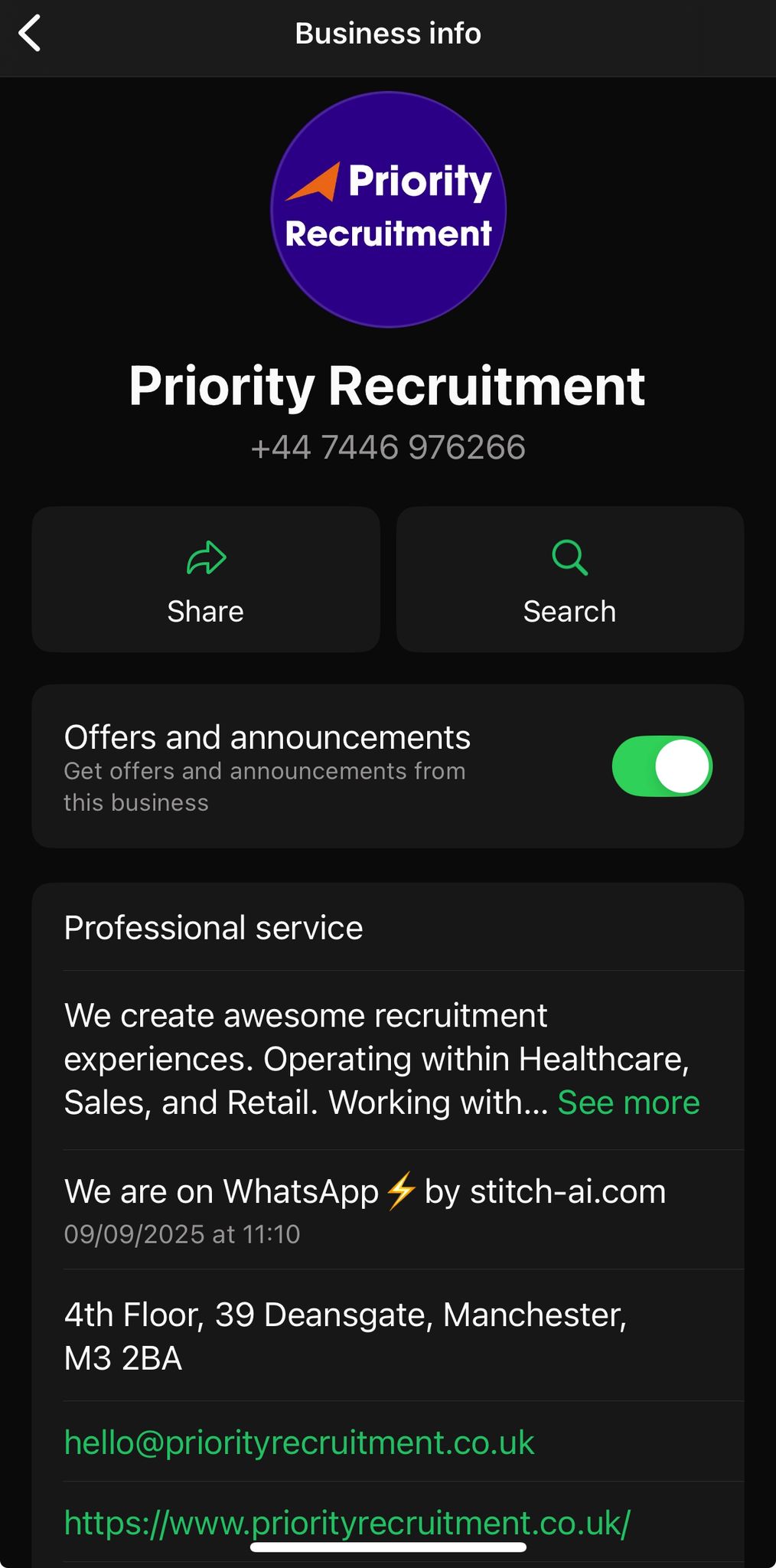
Sometimes, our consultants will reach out to you directly (especially if they have already engaged with you). You can always confirm it’s really them as we publish their numbers and full contact information on our Meet the Team page.
If you ever receive a message that doesn’t look right, check the number, look for our logo, and if you’re still unsure, contact us directly through our website or main office number.
WhatsApp allows us to cut through the noise, making communication quicker and easier for our candidates. By staying alert to scams and knowing how to identify a genuine message, you can make the most of this fast and effective way of staying in touch with us.
Contact Priority Recruitment
Telephone Number: 0333 577 4777
Email: hello@priorityrecruitment.co.uk
Categories
Latest Blogs
-
 100,000 Retail Jobs for Young People: What the Government’s New Initiative Means for Retail RecruitmentThe UK retail sector is joining forces with the government to help tackle youth unemployment, with retailers committing to create…Learn More
 -
 The UK Enforcement Sector Is Changing: What New Government Regulation Means for Enforcement AgentsThe UK enforcement sector is entering a new era of professional standards, accountability and independent oversight. On 28 August 2026,…Learn More
 -
 The Job Search Mistakes Recruiters See All the TimeSearching for a new job can feel like a full-time job in itself. You update your CV, scroll through vacancies,…Learn More
